
The Future of Privacy: Why Local Browser Processing is the New Standard
In an era of data breaches and AI scraping, processing your sensitive documents locally in the browser is the ultimate security move.
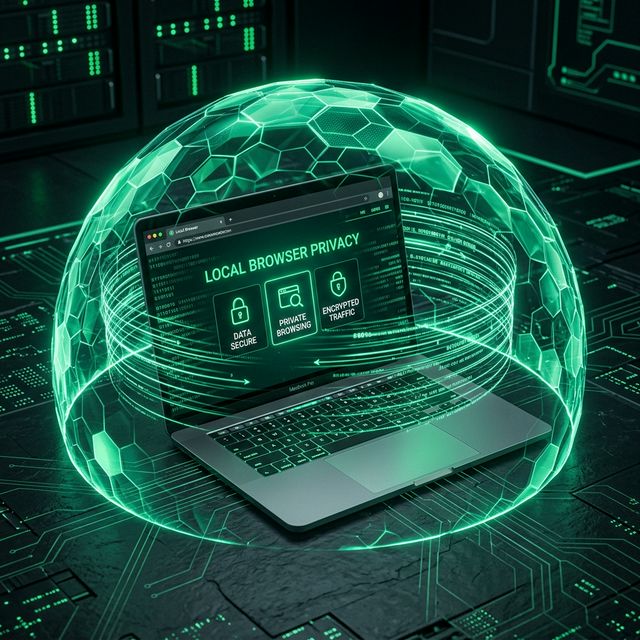
The Future of Privacy: Why Local Browser Processing is the New Standard
As we navigate through 2026, the conversation around digital privacy has shifted from "How can I hide my data?" to "How can I ensure my data never leaves my control?" For years, the internet operated on a "Cloud-First" model where every action—from editing a photo to merging a PDF—required uploading your file to a remote server.
Today, that model is being challenged by a more secure, faster, and more private alternative: Local Browser Processing.
The Cloud Problem: Why Uploading is Risky
When you upload a document to a traditional online PDF tool, you are trusting three things:
- The company’s security won't be breached.
- The company won't use your data to train their AI models.
- The company will actually delete your file as promised.
In the past decade, we've seen even the biggest tech giants fail on these promises. For sensitive documents like tax returns, legal contracts, or medical records, "trusting the cloud" is increasingly seen as a liability.
What is Local Browser Processing?
Thanks to advancements in WebAssembly (Wasm) and the power of modern client-side JavaScript, your browser is now as capable as many desktop applications. Local processing means that when you use a tool like Postification, the "engine" that handles your file is downloaded to your browser once. When you drop a file in, the work happens entirely on your CPU and RAM.
Nothing is uploaded. Your file stays on your hard drive, is processed in memory, and then you "download" the result from your own RAM.
The Advantages of the Local Model
1. Absolute Privacy
By definition, a data breach on a local-first platform is impossible because there is no central database of user files to steal. Your privacy is guaranteed by the architecture of the app itself, not just a promise in a Privacy Policy.
2. Speed (No Upload Wait)
In 2026, we deal with larger files than ever—4K videos and high-res document scans. If you have a 100MB PDF, uploading it on a typical connection might take a minute. With local processing, the "upload" is instantaneous because it's just moving data within your own machine.
3. Offline Capability
Ever needed to edit a document while on a plane or in a dead zone? Local-first web apps can be cached (using Service Workers) so they work even when you're completely disconnected from the internet.
4. Zero Data Scraping
Many "free" online tools sustain themselves by selling metadata or using user content to refine machine learning models. Local processing effectively "blinds" the service provider to your content, ensuring your intellectual property remains yours.
The Verdict
The era of blind trust in the cloud is over. As we move further into a world dominated by AI and data-hungry algorithms, the smart money is on edge-computing and local processing. Companies like Postification are leading this charge, proving that you don't have to sacrifice convenience for security.
Next time you need to process a sensitive file, ask yourself: Does this file really need to travel across the ocean to get the job done?